
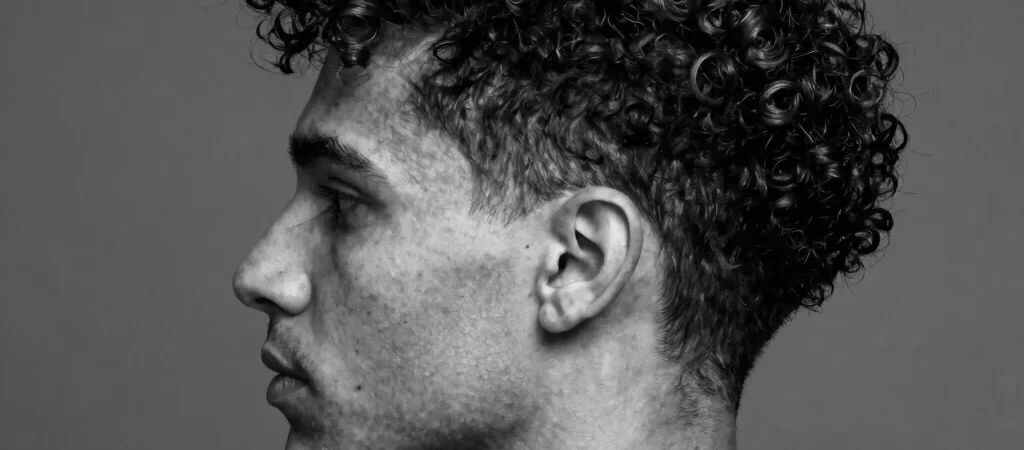
A curly taper is defined as much by the transition at the sides as by the curls on top. When the outline is too abrupt, the cut can feel disconnected; when it is carefully blended, the natural texture stays in focus.
Set the Top Length First
Talk about the top before choosing a guard length for the sides. Curls can look considerably shorter when dry than when stretched, so show your barber how the hair sits naturally and describe whether you want visible curl separation or a closer, more compact shape.
A photo from the front helps explain the silhouette, but bring side and back views too. Point out where you want the taper to begin around the temples and neckline rather than relying on the word low or high alone.
Keep the Transition Deliberate
The taper should move gradually from the fuller top into shorter hair at the sideburns and nape. Ask how the shape will look as it grows out, especially if you prefer a soft neckline rather than a sharply squared finish.
A clean outline can make the cut look intentional, but taking too much away at the temples may change the balance of the whole head. Check the profile during the consultation and make sure the transition still connects to the length you want to keep.
Work With the Curl Pattern
After washing, gently squeeze out water with a towel instead of rubbing the curls into frizz. Apply a small amount of a styling product that suits your hair, then let the curls dry with minimal touching or use a diffuser on a comfortable setting.
Maintenance depends on how crisp you want the edges and how quickly your hair grows, so there is no single schedule that fits everyone. Product links in this guide may earn OVEXAS a commission; we do not claim firsthand testing of any linked item.